

Khushboo Kaul
Khushboo Kaul is a Marketing and Media Intern at NATO Council of Canada. She completed her Bachelors Degree in Computer Science and Engineering from Maharshi Dayanand University, India. She worked as a Management Trainee at Alstom India Limited, Noida, India. She is currently pursuing her Post-Graduation in Strategic Relationship Marketing from George Brown College, Toronto, Canada. She is an International Student Ambassador at George Brown College. She is also a Student Volunteer at Ontario Council for International Cooperation (OCIC), Ecologos Institute (Water Docs Toronto Film Festival) and World Vision Canada.
Email: khushboo.kaul@natocouncil.ca
LinkedIn: http://www.linkedin.com/in/khushbookaul
Related Articles

Adjusting to Modern Warfare: How the Russo-Ukrainian War Changed Aerial Warfare
Posted on Author Alaina Brunone
This article examines how the Russo-Ukrainian war led to the proliferation of low-cost unmanned aerial vehicles (UAVs) within modern military strategy. Specifically, it highlights how Canada and its NATO allies are shifting toward procuring first-person-view (FPV) drones as highly cost-effective alternatives to multi-million-dollar conventional hardware. The article ultimately argues that this technological shift forces Canada to rethink its own defence posture—not only by deploying UAVs to assert Arctic sovereignty, but also by modernizing NORAD to counter the growing threat of UAVs.
A Canadian Gun Culture?
Posted on Author Kara Chiki
The recent fatal shooting of an innocent young woman in Toronto’s downtown entertainment district reminded Canadians of the impact the current national gun policy is having on cultural values and societal welfare.
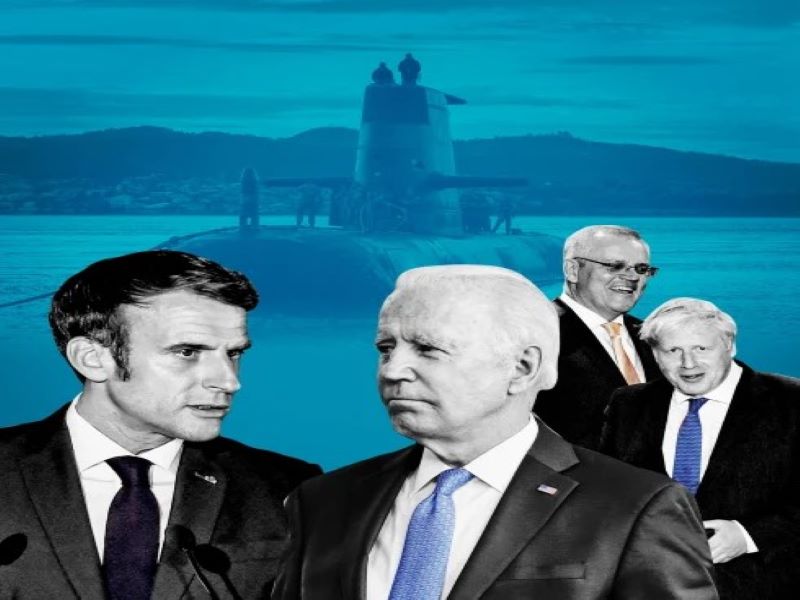
NATO, AUKUS & the Indo-Pacific: Further Proof of Intra-Alliance Friction
Posted on Author Andrew Erskine
In this article, Research Analyst Andrew Erskine assesses the implications of the AUKUS security pact on NATO’s unity and cohesion towards a collective Indo-Pacific strategy and the need for the Alliance to develop an Indo-Pacific Council to avoid further debacles of intra-alliance friction.