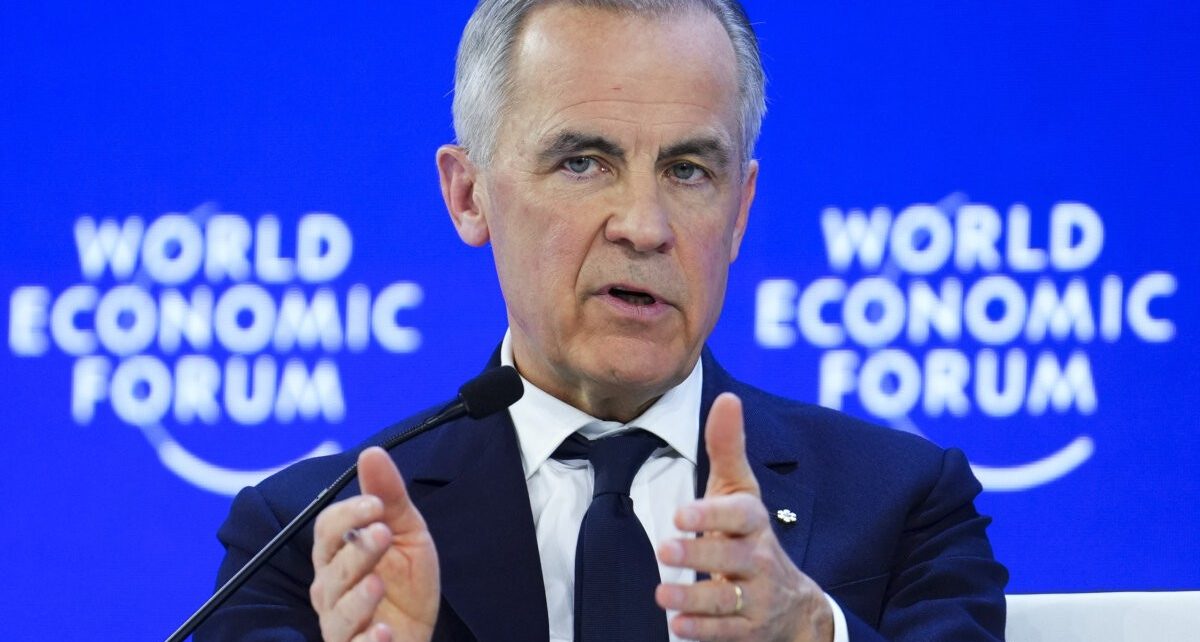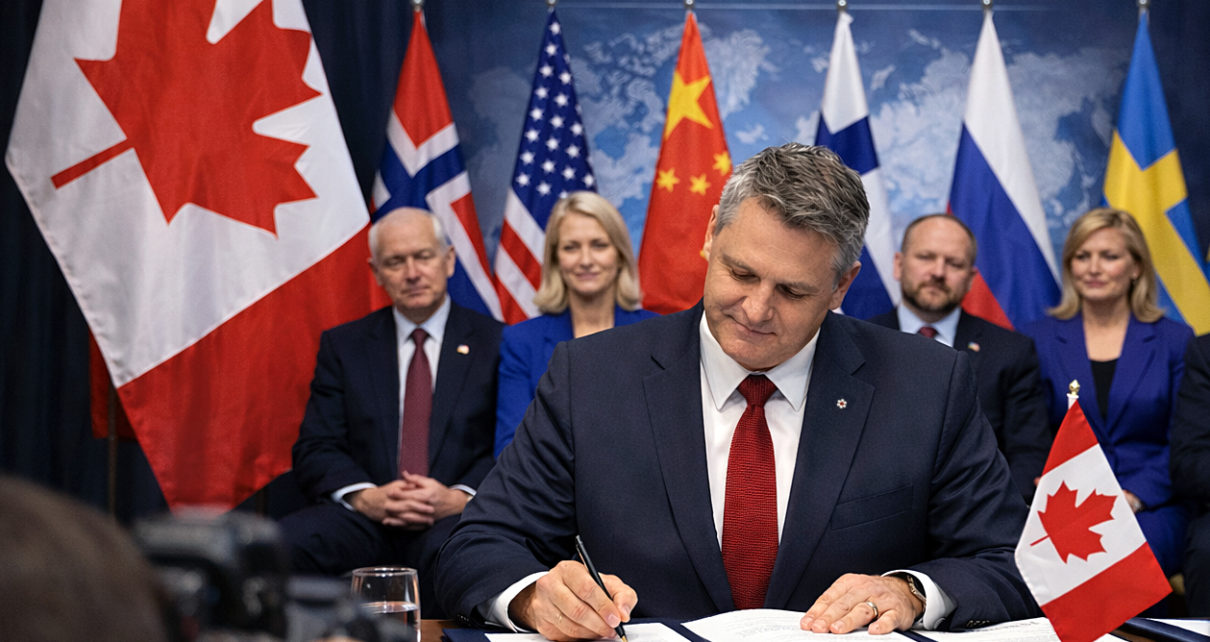
As NATO faces an era of unprecedented economic coercion between allies, can a military alliance built for tanks and treaties truly protect its members from tariffs and trade wars? In this article, Kaya Dupuis examines Canadian Prime Minister Mark Carney’s landmark speech at the World Economic Forum, arguing that Canada’s pivot toward “strategic autonomy”, leveraging energy, critical minerals and bilateral trade deals as defensive tools, exposes a fundamental gap in NATO’s mandate, one that leaves middle powers increasingly vulnerable to economic threats that Article 5 was never designed to address.
Tag: geopolitics
Power Play in the Arctic: Part 6 – Cold Fronts, Hot Choices: Dr. George Soroka Looks Ahead
*This is the final instalment of a six-part series. For the final instalment of the “Power Play in the Arctic” series, Marcus Wong (MW) sat down with Dr. George Soroka (GS) of Harvard University’s Department of Government, who also serves as Executive Officer of The Harvard Academy for International and Area Studies at the Weatherhead Read More…
Arctic Sovereignty and Geopolitical Competition
As the Arctic transforms from a frozen frontier into a contested geopolitical arena, questions of sovereignty, environmental responsibility, and security have converged into one of the most pressing challenges in the 21st century. Once referred to as a remote, ice-covered expanse, the region is now a stage where the impacts of climate change intersect with Read More…
POWER PLAY IN THE ARCTIC: PART 5 – Blueprint for Canadian Arctic Leadership
*This is the fifth instalment of a six-part series. From a legal perspective, Canada’s ability to assert its sovereignty and security in the Arctic is hindered by the United Nations Convention on Law of the Sea (UNCLOS) and the Polar Code. Notably, while UNCLOS and the Polar Code respectively attempt to create a “standard framework Read More…
Democracy, Discontent, and the Digital Age: Lessons from Nepal for the World
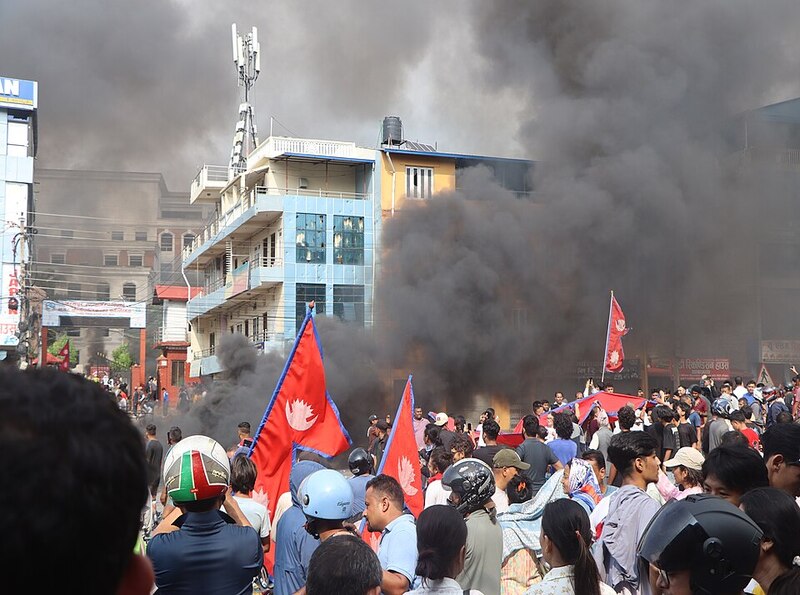
Narayan Srivastava examines Nepal’s 2025 political upheaval as a warning signal for democracies worldwide.From a sweeping social-media ban to youth-led protests that brought down a government, Nepal reveals how digital connectivity, declining trust in institutions, and demographic pressures are reshaping political power. This article situates Nepal within a broader global pattern from South Asia to Europe where digitally mobilized citizens are challenging elite governance structures. The piece argues that these movements are less about ideology and more about systemic failure, offering critical lessons for democratic resilience, international security, and the future of governance in the digital age.
From Kyiv to Taipei: Why the Russian-Ukrainian War Matters in the Indo-Pacific
Alexander Morrow and Nataliia Dikalchuk explain why Ukraine’s fight matters far beyond Europe. The war is reframing deterrence in the Indo-Pacific, prompting Taiwan to prioritize self-reliant defence and pushing China to reassess Western unity. Their analysis highlights how democratic resilience in one region shapes security calculations in another.
The Philippines at a Crossroads: Domestic Politics and NATO’s Indo-Pacific Challenges
What implications does domestic Philippine politics pose for foreign policy for NATO members? In this article, Karissa Cruz highlights the broader implications posed by the Duterte-Marcos feud over foreign policy direction, what it means for NATO, and how members should perceive these tensions amidst the heightened aggression by China.
Strategic Myopia: The Folly of Tariffing China to Halt Russian Aggression in Ukraine
In Strategic Myopia: The Folly of Tariffing China to Halt Russian Aggression in Ukraine, Daniel Lincoln argues that proposed secondary sanctions on China would backfire by hurting Western economies more than Beijing. Drawing on data and historical parallels, he contends that China’s vast domestic market, diversified trade networks, and resilience to sanctions make economic coercion ineffective. Instead, he maintains that NATO should focus on understanding Beijing’s strategic calculus and pursue policies that engage rather than alienate China.
A New Playbook: Strategic Autonomy and NATO in the Indo-Pacific
By Daniel Lincoln The modern Indo-Pacific is witnessing assertions of strategic autonomy that challenge classical geopolitical logics and patterns of great power competition. During the 2025 Shangri-La Dialogue in Singapore, regional leaders signaled that they will not be corralled into binary agreements amid intensifying US-China rivalry. The forum revealed a fundamental rejection of zero-sum superpower Read More…
AI-Powered Mis/Disinformation War
In today’s digital age, mis-and disinformation has become pervasive, fueled by advancements in AI and deep-fake technology, while the centralized nature of social media platforms accelerates its spread, amplifying false narratives to vast audiences with unprecedented speed. NATO recognized this growing threat to democracy during the Washington Summit last summer, emphasizing its critical impact in Read More…