

NATO Association of Canada
The mission of NATO Association of Canada is to promote peace, prosperity, and security through knowledge and understanding of the importance of NATO.
We strive to educate and engage Canadians about NATO and NATO’s goal of peace, prosperity and security. NATO Association of Canada ensures that we have an informed citizenry able to contribute to discussions about Canada’s role on the world stage.
As a leading member of the Atlantic Treaty Association (ATA), NATO Association of Canada has strong and enduring ties with sister organizations in many of the alliance countries, as well as members of NATO’s “Partnership for Peace” and “Mediterranean Dialogue” programmes. The NAOC has had a leading role in the recent transformation and modernization of the ATA, and helped to create and develop the Youth Atlantic Treaty Association (YATA).
The NAOC has strong ties with the Government of Canada including Global Affairs Canada and the Department of National Defence. We are constantly working to create and maintain relationships with international organizations such as the World Bank Group, the European Bank of Reconstruction and Development, NATO Headquarters, the International Criminal Court, and other prominent international NGOs and think tanks.
Related Articles
Canada’s Defense Spending Crisis: A Fight at Two Fronts
Posted on Author Misha Hajnoorolah-Khamseh
Decades of relative peace have led Canadians to believe that defense spending is unnecessary. However, external threats are looming towards our southern border and the Arctic, leaving Canada unprepared and unprotected.
The NATO Council of Canada Spring Conference, 2010
Posted on Author NATO Association of Canada
The NATO Council’s annual Spring Conference was held on April 8, 2010. This year’s topic was ‘Minimizing Conflict in the Race for Natural Resources: Securing Economic Stability in the 21st Century’, looking at different issues pertaining to energy security from geopolitical, economic and military standpoints. Conference attendees were offered an in-depth look at many different aspects of resource scarcity from an impressive list of speakers from a wide range of industries and professional backgrounds. The speakers provided thorough, informed and detailed discussions that sparked debate and dialogue on how energy security will impact both the public and private sectors and how NATO will define its role in dealing with the increasingly complex security issue.
Mandatory Military Service Extended to Women in Norway
Posted on Author Rebecca Mukuna
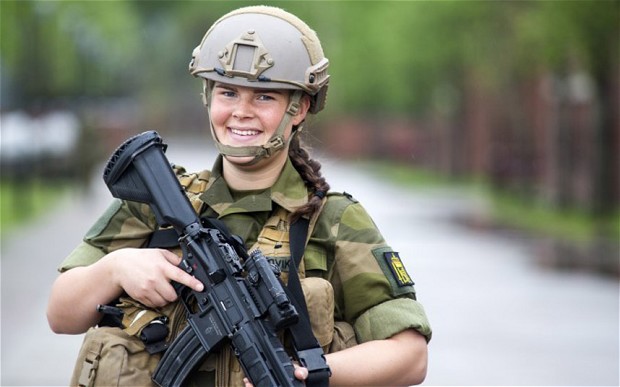
Rebecca Mukuna examines how the Norwegian government is promoting a gender-neutral society through the further incorporation of women into the country’s military force.