

NATO Association of Canada
The mission of NATO Association of Canada is to promote peace, prosperity, and security through knowledge and understanding of the importance of NATO.
We strive to educate and engage Canadians about NATO and NATO’s goal of peace, prosperity and security. NATO Association of Canada ensures that we have an informed citizenry able to contribute to discussions about Canada’s role on the world stage.
As a leading member of the Atlantic Treaty Association (ATA), NATO Association of Canada has strong and enduring ties with sister organizations in many of the alliance countries, as well as members of NATO’s “Partnership for Peace” and “Mediterranean Dialogue” programmes. The NAOC has had a leading role in the recent transformation and modernization of the ATA, and helped to create and develop the Youth Atlantic Treaty Association (YATA).
The NAOC has strong ties with the Government of Canada including Global Affairs Canada and the Department of National Defence. We are constantly working to create and maintain relationships with international organizations such as the World Bank Group, the European Bank of Reconstruction and Development, NATO Headquarters, the International Criminal Court, and other prominent international NGOs and think tanks.
Related Articles
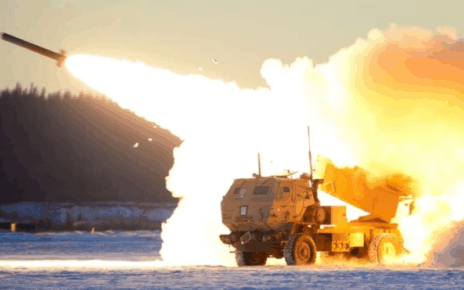
HIMARS and the Sovereignty Challenge Facing the Canadian Armed Forces
Posted on Author Maral Hamzehloo
Why is Canada buying HIMARS? In this piece, Maral Hamzehloo examines how Canada’s acquisition of the High Mobility Artillery Rocket System (HIMARS) addresses a critical capability gap within the Canadian Armed Forces and supports Ottawa’s commitment to fielding a combat-capable brigade in Latvia. As HIMARS becomes NATO’s standard long-range fires platform, the system also strengthens interoperability with key allies. However, she argues that the capability’s effectiveness remains tied to access to U.S.-produced munitions, support networks, and industrial capacity. Drawing on recent examples involving Estonia and Ukraine, she contends that Canada should pair the acquisition with stronger munitions resilience, expanded allied procurement mechanisms, and greater domestic industrial participation to ensure the capability can be sustained during a major crisis.
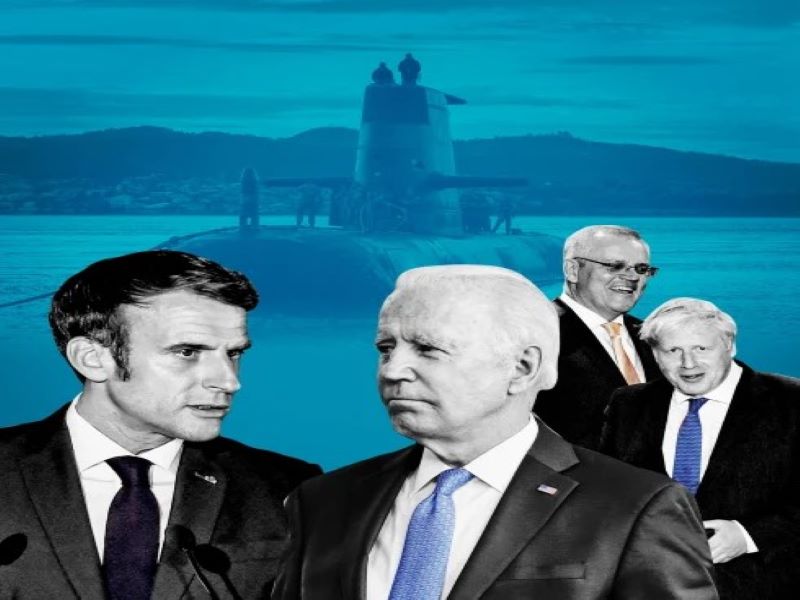
NATO, AUKUS & the Indo-Pacific: Further Proof of Intra-Alliance Friction
Posted on Author Andrew Erskine
In this article, Research Analyst Andrew Erskine assesses the implications of the AUKUS security pact on NATO’s unity and cohesion towards a collective Indo-Pacific strategy and the need for the Alliance to develop an Indo-Pacific Council to avoid further debacles of intra-alliance friction.
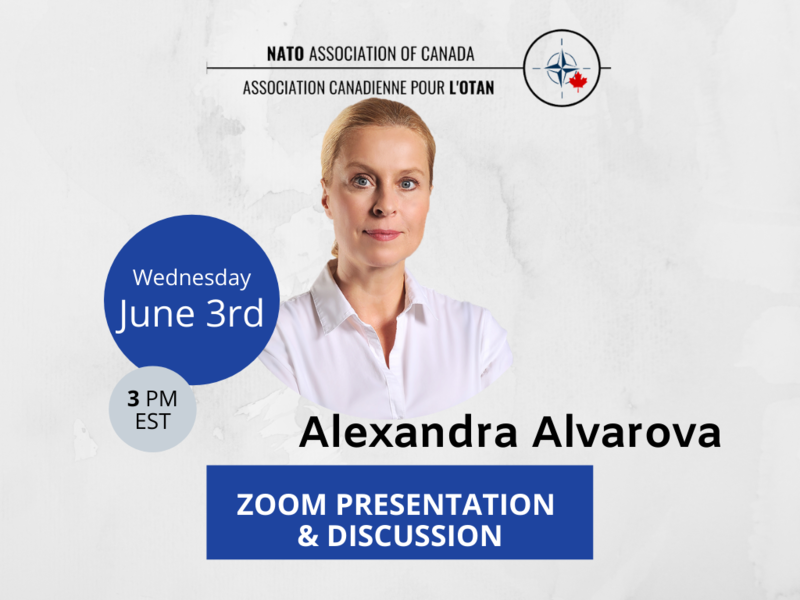
Disinforming Ourselves to Death: Propaganda, Social Media, Data Weapons In the Age of AI – A Moderated Discussion with Alexandra Alvarova
Posted on Author NATO Association of Canada
ON June 3rd, 2020, the NAOC hosed Alexandra Alvarova and Dr. Joseph McQuade for a discussion focused on propaganda, hybrid-warfare, data-weapons, artificial intelligence and disinformation.