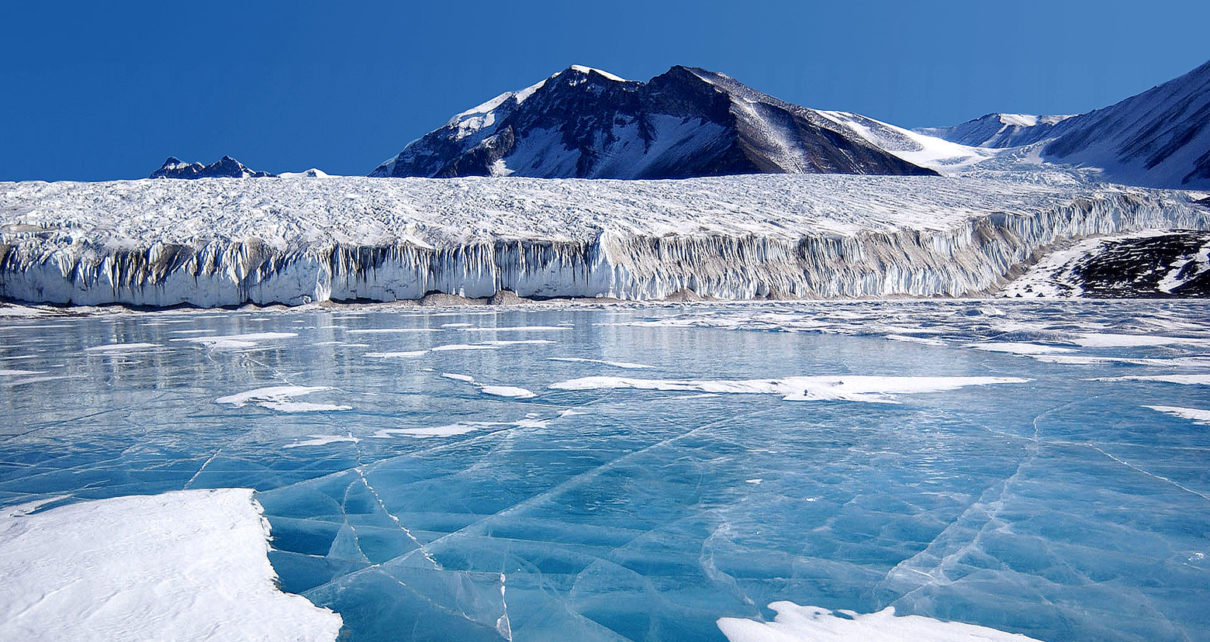
“Water is not a commercial product like any other but, rather, a heritage which must be protected, defended, and treated as such.” What happens when mountains lose their ice? Across the Rocky Mountains, glaciers have shaped landscapes, sustained ecosystems, and supplied water for generations, yet they are rapidly retreating, signaling a growing environmental crisis. The growing threat of water insecurity is being recognized not only as an environmental issue but also as a major national and international security concern. The growing threat of water insecurity is being recognized not only as an environmental issue but also as a major national and international security concern. A 2024 report by the NATO Parliamentary Assembly warned that the frequency and severity of water crises are rising globally, driven by climate change, environmental degradation, and unsustainable water management. Water scarcity can intensify geopolitical tensions, fuel instability and increase migration pressures, and heighten the risk of conflict, particularly in regions already experiencing political or economic fragility. The water insecurity threatens the social, economic, energy, and military resilience of NATO allies themselves. Climate change is altering precipitation patterns, intensifying droughts, and disrupting freshwater systems, creating vulnerabilities that adversaries could potentially exploit. NATO specifically recognizes that environmental degradation and water scarcity act as “threat multipliers” because they worsen existing societal tensions and place additional strain on infrastructure, governance systems, and emergency response capabilities. As climate change accelerates globally, the impacts on the cryosphere are becoming increasingly evident in freshwater systems, ecosystems, infrastructure, and environmental security worldwide.
These concerns are highly relevant to Canada, particularly the Prairie provinces and southern Alberta, where climate-driven changes to the cryosphere are already affecting long-term water security. The Canadian cryosphere’s shrinking snow and ice cover disrupts ecosystems, alters river flow patterns, and threatens long-term water security. A study on the water crisis in Canada’s Western Prairie provinces has shown that these provinces face limited freshwater supplies despite Canada’s reputation for water abundance. Rising temperatures, increased evaporation, glacier retreat, population growth, and poor water management are intensifying pressure on regional water systems, leading to a severe water crisis. As climate change accelerates glacier retreat and reduces snow accumulation, the stability of these water systems becomes increasingly uncertain.
Southern Alberta is especially vulnerable since much of its water supply depends on runoff from the Rocky Mountains and on increased snowpack accumulation in the Bow River Basin. As Southern Alberta experiences increased population growth and agricultural and industrial activity, the region’s already limited water supply faces growing pressure from rising demand and climate change. A 2020 Alberta water supply study highlighted growing concerns about long-term water security in southern Alberta as climate change continues to alter hydrological systems. The rising temperatures, drought conditions, and declining mountain snowpack are placing increasing stress on the Bow River Basin, which supplies water to millions of people, agriculture, and industry across the region. The Council of Canadians stated that Canada’s water security challenges stem from a declining freshwater supply across the Prairies, combined with “antiquated licensing,” an insufficient national water policy, and inadequate long-term investment in water management systems. Scientists warn that continued glacier retreat threatens the long-term stability of river flows because glaciers act as natural “drought regulators” by releasing meltwater during dry years. Without this buffering system, Southern Alberta could face greater water shortages, increased competition between agricultural and municipal users, and more fragile ecosystems. Lower summer river flows may also threaten fish habitats and biodiversity, while more intense rainfall events increase the risk of flooding, as seen during the devastating 2013 southern Alberta floods.
From a NATO security perspective, glacier retreat should be understood not simply as an environmental issue but as a climate-related threat multiplier. As freshwater availability declines and water demand increases, pressures on agriculture, energy production, infrastructure, and local economies are likely to intensify. These impacts can undermine community resilience, increase the costs associated with climate adaptation, and place additional strain on government resources. NATO has increasingly recognized that climate change can exacerbate existing vulnerabilities by affecting critical infrastructure, resource availability, and societal stability. In Southern Alberta, the loss of glacier-fed water supplies has implications that extend beyond environmental degradation, influencing food production, economic security, and the resilience of communities that support Canada’s broader national and allied security objectives. Similar challenges are emerging across several NATO member states that depend on mountain water systems, highlighting the growing importance of climate adaptation and water security within the Alliance’s broader resilience agenda.
Adaptation strategies will become essential to maintaining water security in Alberta. Measures such as improving water-use efficiency, expanding water shortage infrastructure, and implementing sustainable watershed management practices are increasingly necessary as climate variability grows. The Council of Canadians emphasized that water scarcity in the Prairies cannot be addressed solely through increased storage or diversion projects; instead, sustainable conservation strategies, improved watershed management, stronger interprovincial cooperation, and updated national water policies are necessary to ensure long-term resilience. These concerns demonstrate how climate-driven change affects Canada’s environmental security, economic stability, and national sovereignty. The NATO Parliamentary Assembly report also emphasizes the importance of strengthening resilience through sustainable water management, climate adaptation strategies, infrastructure investment, and international cooperation. These concerns demonstrate how changes in Canada’s cryosphere directly impact freshwater systems, infrastructure, ecosystems, and human security across the Prairie provinces, and are also connected to economic stability, public safety, national resilience, and global security in a warming world.
Within NATO, several countries have developed policies that could inform future-generation strategies. The Netherlands has become a global leader in water governance and climate adaptation through integrated planning approaches that combine flood management, ecosystem protection, and long-term climate resilience. One such example is the Room for the River program, which demonstrates how governments can reduce water-related risks by working with natural systems rather than relying on traditional infrastructure. Through the restoration of floodplains and the creation of water storage areas. Additionally, Germany offers an example of effective river-basin management, where stakeholders across multiple jurisdictions collaborate to coordinate water use and environmental protection. These are useful lessons for improving cooperation among federal, provincial, municipal, and indigenous governments in Canada. As Southern Alberta experiences increasing variability in river flows due to glacier retreat and climate change, similar nature-based adaptation strategies could complement existing water-management strategies.
Addressing these challenges will require coordinated action across all levels of government, alongside stronger collaboration among scientists, Indigenous communities, policymakers, and local stakeholders. As stated above, investments in sustainable water management practices, updated infrastructure, conservation initiatives, and climate adaptation strategies will become increasingly important to ensure long-term resilience in Southern Alberta and across Canada’s Prairie provinces. At the same time, climate change demonstrates how environmental issues are closely interconnected with economic stability, public health, food security, and national security. Reduced water availability can affect agricultural production, energy generation, ecosystems, and the livelihoods of communities that depend on freshwater systems. As Canada’s cryosphere continues to change, the pressures placed on freshwater resources are expected to intensify, making proactive planning through sustainable governance essential. Thus, protecting Canada’s water systems is a critical step toward ensuring long-term social, economic, and national resilience in an increasingly warming climate.