Centre For Disinformation Studies

What Canada Has Yet To Learn from Ukraine About Countering Disinformation

Imagine a government on the verge of a decision that will take years to implement and billions of dollars to sustain. A major defence procurement. A long-term NATO deployment. A new assistance package for an ally. On paper, everything looks orderly. Briefings are prepared. Consultations take place. Procedures are followed. Yet, even before the decision Read More…

4. Programs NATO and Canada

When Allies Become Threats: What U.S. Pressure on Greenland Reveals about NATO’s Fragility and Canada’s Arctic Vulnerability

Rachel Potter analyzes the geopolitical fallout of U.S. pressure on Greenland, arguing that it reveals a deeper fragility within NATO and raises a critical question for Canada: can alliance guarantees still be trusted when power begins to override restraint?

Environment, Climate Change, and Security

Power Play in the Arctic: Part 6 – Cold Fronts, Hot Choices: Dr. George Soroka Looks Ahead

*This is the final instalment of a six-part series. For the final instalment of the “Power Play in the Arctic” series, Marcus Wong (MW) sat down with Dr. George Soroka (GS) of Harvard University’s Department of Government, who also serves as Executive Officer of The Harvard Academy for International and Area Studies at the Weatherhead Read More…

Xi Jinping 02, credit: Trong Khiem Nguyen
Indo-Pacific and NATO

Hedging with the Dragon: Mark Carney’s China Visit and Canada’s Search for Strategic Autonomy 

What does Mark Carney’s decision to re-engage China signal about Canada’s strategic options in a more coercive global economy? Tasneem Gedi argues that Ottawa’s limited recalibration with Beijing reflects an unavoidable strategy of hedging amid U.S. unpredictability. While such engagement may expand Canada’s room for maneuver in an increasingly coercive global economy, it carries risks and thus must be pursued narrowly, conditionally and in close alignment with Canada’s alliance commitments.  

4. Programs NATO and Canada Uncategorized

From Caracas to Canada: What U.S. Doctrine Means for the Northwest Passage 

Following the American intervention in Venezuela, Jonah Moffatt assesses the “Trump Corollary” outlined in the 2025 National Security Strategy, and what this hemispheric vison of security means for the long-contested Northwest Passage. He argues that through diplomatic coordination with its Nordic allies, Canada can utilize the forum and frameworks of NATO to protect its national interests while emerging as a leader of multilateralism in a time of uncertainty.

Canadian Armed Forces

From Unisex to Women-Specific: Rethinking Equipment Fit in the CAF

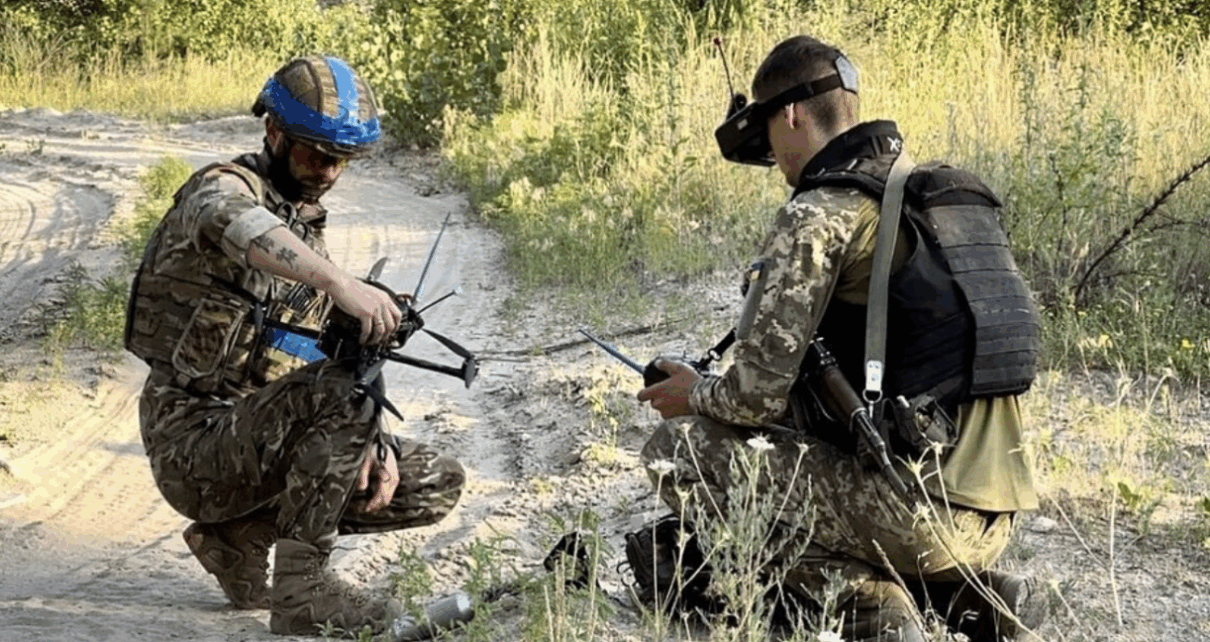
When “unisex” equipment is designed around male body norms, readiness is not neutral. As women’s participation in the Canadian Armed Forces grows, gendered differences in body proportions have practical consequences for mobility, endurance, and injury risk. Referencing NATO anthropometric data and Ukraine’s wartime redesign efforts, this article underscores why women-specific combat clothing fit is central to force generation and long-term sustainability.

Society, Culture, and Security

Le plan de Donald Trump pour l’Ukraine : percée diplomatique ou fantasme géopolitique ?

La réélection de Donald Trump en novembre 2024 a relancé le débat sur l’avenir de la guerre russo-ukrainienne et, plus crucial encore, sur la cohérence de l’alliance atlantique. À peine investi, Trump a fait fuiter début novembre 2025 un plan de paix en 28 points pour l’Ukraine, inspiré d’un document russe et négocié en secret Read More…

Women in Security

Parité ou Fragilité : Pourquoi l’Exclusion des Femmes Affaiblit la Sécurité Internationale

Au cours de la dernière décennie, il est clair que lorsque les femmes participent aux décisions de sécurité, la paix est plus durable. Une étude portant sur plus de 180 accords montre que ceux impliquant des femmes ont 35 % de chances supplémentaires de durer au-delà de quinze ans. Dans le Sahel, leur participation à Read More…

Previous Events

Global Peace Summit of Emerging Leaders: Reflections on Peacebuilding, Youth Leadership, and Canada’s Role in Global Security

From 20–23 January 2026, the interns of the NATO Association of Canada, Nataliia Dikalchuk, Isabelle Zhu and Matthew Reddock attended the 5th Global Peace Summit of Emerging Leaders in Bangkok, Thailand. The event was organized by Humanitarian Affairs Asia at the United Nations Conference Centre. The Summit convened approximately 400 young leaders from over 60 Read More…

Isabelle Zhu Women in Security

Shifting Priorities in Ukraine: Is NATO’s WPS Agenda Under Threat?

WPS policies are often disregarded when matters deemed of higher priority emerge, despite NATO’s high engagement of WPS values through public diplomacy, military, and political means. Russia’s invasion of Ukraine has posed the biggest security crisis to NATO in decades, and considering the gendered dimensions of the war, which has seen high rates of sexual and gender
based violence, NATO’s limited WPS response leaves the future of the Agenda in question. As a core tenet of NATO’s values, WPS must not be disregarded; member states that have adopted FFPs, such as Canada, should continue to drive the WPS agenda forward. This article makes key recommendations, including shifting to a human rights-based approach (HRBA) and employing more intentional language in operational directives, to support Ukraine’s current WPS policies.