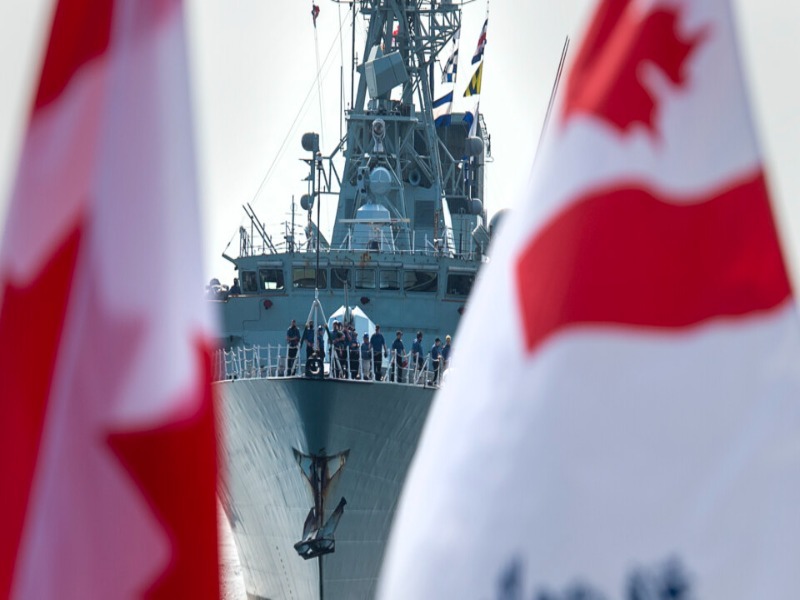
This April marks two years since the Department of National Defence released its updated policy titled “Our North, Strong and Free: A Renewed Vision for Canada’s Defence,” which pledged $8.1 billion over five years and $73 billion over 20 years in national defence, signifying a new commitment to a military that had previously been underfunded and understaffed. Highlights of the plan include modernizing the military through acquiring new equipment, including airborne early warning aircraft, long-range surface-to-surface missiles, and utility helicopters. The plan also invests in personnel through modern recruitment measures, aiming to reach 71,500 Regular Force and 38,800 Reserve Force members by 2032.
How much of this has been accomplished thus far? While it is true that Canada is spending more on defence, the gap between what “Our North, Strong and Free” promised and what has actually been delivered reveals a structural problem that no single government document or administration has yet managed to fix. To understand why, it helps to know that “Our North, Strong and Free” — known in defence circles as ONSAF — is Canada’s third major defence policy document since 1994. Each arrived with ambitious spending targets, but each failed to meet them due to an outdated, inefficient procurement system that could not spend what it was given.
The Funding Gap & Personnel Crisis
Since 2007, Canada’s procurement system has left over 20% of capital acquisition funds (up to $1.5 billion) unspent each year due to equipment delivery delays. Unspent funds are effectively lost, typically returned to the federal treasury rather than carried forward to the next year. The Department of National Defence is expected to make up for this loss in future funding, which, combined with inflation and diminishing purchasing power, creates a compounding deficit in which each lost dollar costs more to recover. These failures are deeply entrenched in the procurement system’s structural constraints. For example, until October 2025, defence procurement was divided across three departments — National Defence, Public Services and Procurement Canada, and Innovation, Science and Economic Development. No single department owned the outcome, and requirements could be added or changed mid-process, restarting timelines and inflating costs. The result was a system structurally capable of announcing procurement but structurally resistant to completing it.
This creates the funding gap: the procurement system causes delays, so the equipment is not delivered on time; there is nothing to spend the allocated funds on, and the unspent funds are returned to the Treasury. The gap is not a budgeting problem, per se, but rather a procurement execution one, meaning that increasing the defence expenditure commitment alone does not address the underlying structural issues.
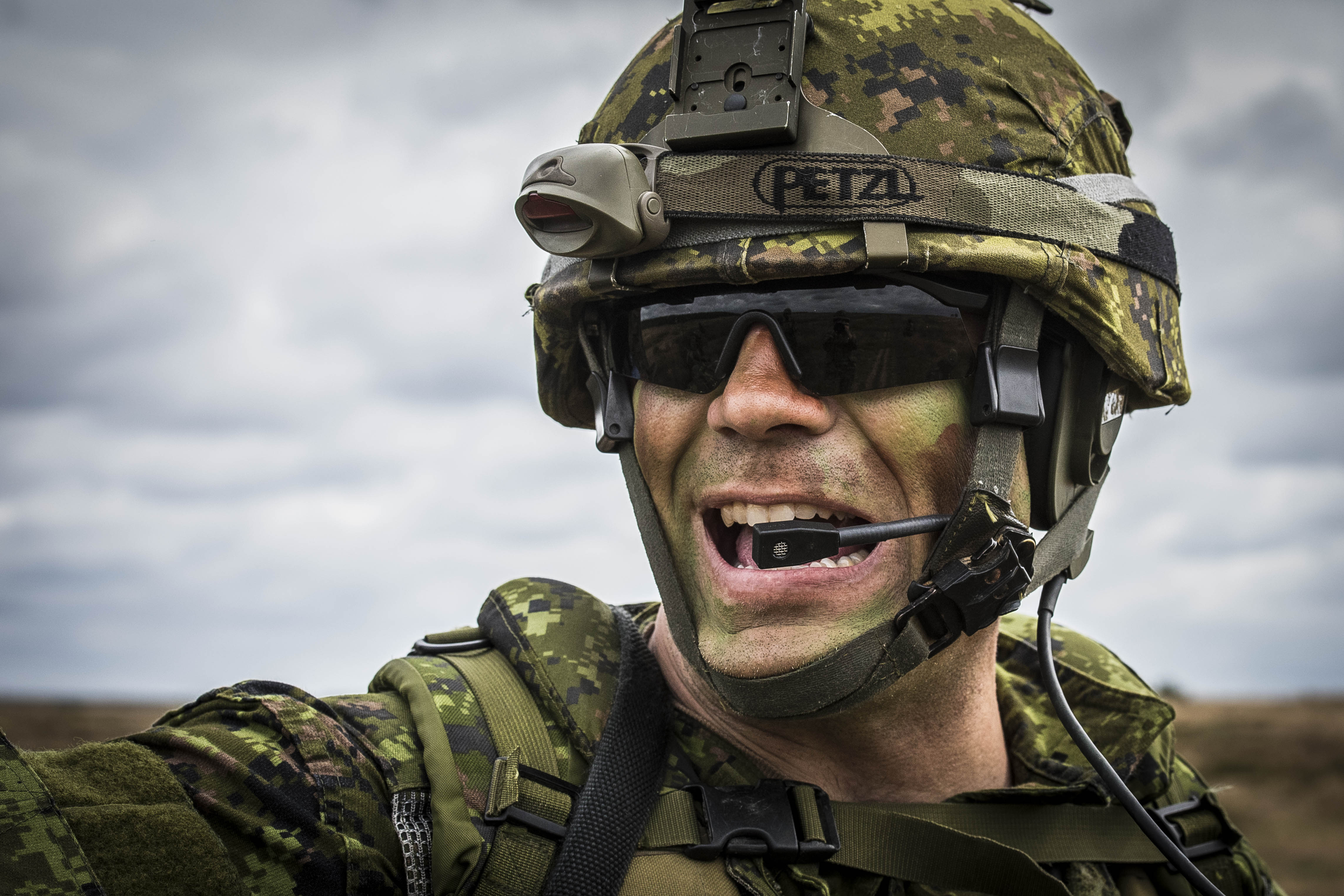
However, this may be less urgent than the CAF’s personnel crisis. Between April 2022 and March 2025, the CAF received roughly 192,000 applications, but only one in 13 made it through the recruitment pipeline, with more than half of the applicants either stopping communication or voluntarily withdrawing within 60 days. Granted, there are signs of improvement as the CAF exceeded its own targets in 2024–25, adding over 6,700 new regular force members, which represents a 55% increase year-over-year. Yet, with a current shortfall of 15,000 personnel, and ONSAF itself acknowledging it would not reach its target force size until 2032, the gains may not be compounding fast enough to matter.
The Carney Pivot
The plan’s second year brought a pivot. The Carney government, propelled by a shifting geopolitical climate and intensifying pressure from NATO allies, announced in Budget 2025 that it would commit $81.8 billion over five years to the CAF — a dramatic acceleration of the ONSAF timeline. Canada has hit the 2% GDP threshold for 2025–26, and raised its defence expenditure target to 5% as of June 2025. In October 2025, it created a new Defence Investment Agency, explicitly tasked with addressing the fragmentation of defence procurement across multiple departments that had slowed the system’s response to urgent military needs. Ironically, the need to build a new procurement architecture 18 months after ONSAF’s release is an implicit acknowledgment that the implementation machinery was never there to begin with.
There have also been gains in defence procurement, notably Canada’s plan to acquire 12 conventionally-powered submarines to replace its aging Victoria-class fleet. Canada has already identified two qualified suppliers for the Canadian Patrol Submarine Project: Germany’s ThyssenKrupp Marine Systems and South Korea’s Hanwha Ocean, with both proposals now under review and a decision expected as early as summer 2026. Secretary of State for Defence Procurement Stephen Fuhr has called the submarine contract a success story and described the pace as moving “at a speed no one thought it would move at”, implying that Canada has taken steps in the right direction to identify and close gaps in the procurement system.
Our North, Strong and Free did not fail, but it has not yet succeeded either. Its first year largely confirmed what critics warned: that without fixing the procurement system, ambitious defence plans never materialize. Its second year showed a government capable of moving faster when the political imperative was sufficient, but the speed of announcement is not the same as the speed of delivery, and Canada’s pattern of defence commitments without detailed implementation plans continued. The submarine procurement, the Defence Investment Agency, and the recruitment gains of the past year are real, but whether they compound into transformation will determine if Canada is genuinely rearming or once again producing a document that is only strong on paper.
Any views or opinions expressed in articles are solely those of the authors and do not necessarily represent the views of the NATO Association of Canada.
Photo retrieved from Forces News.