The Trump administration’s decision to suspend U.S. participation in the Permanent Joint Board on Defence (PJBD) has been widely received in Canada as a provocation. That reading is not wrong, but it is incomplete. What makes this moment distinct is not the pressure itself but the instrument chosen to apply it. The United States is using bilateral defence architecture as a coercive tool to force Canadian compliance on spending targets and procurement decisions. This marks a qualitative shift from decades of NATO burden-sharing complaints delivered through diplomatic channels and alliance summits, and forces Canada to confront a recurring reality: whether deep integration with an increasingly transactional United States still serves its national interests, or whether a more independent defence posture has become an outright necessity.
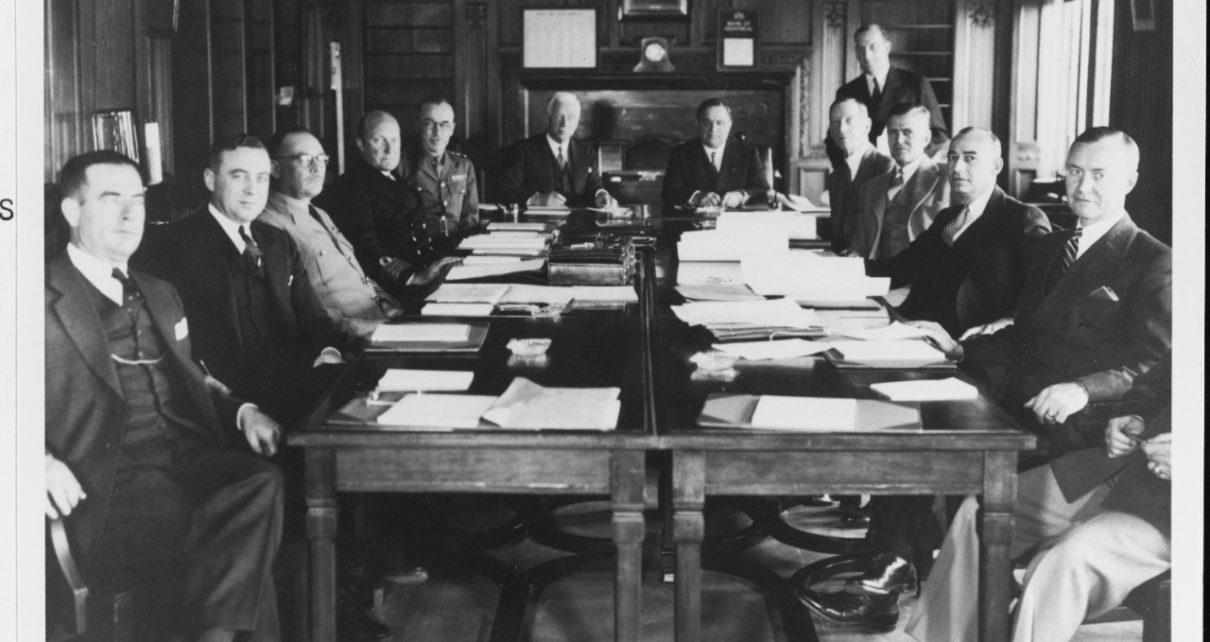
Established in 1940 by Franklin D. Roosevelt and William Lyon Mackenzie King on the eve of American entry into the Second World War, the PJBD was conceived as a permanent structure for bilateral continental defence planning. Over eight decades, it evolved from a wartime coordinating body into the primary institutional channel through which Canada and the United States managed strategic-level defence cooperation, with topics like NORAD modernization and Arctic security regularly on its agenda. It is not, and has not been for some time, a high-visibility institution. It has met only seven times in the last decade, and the Canadian public was largely unaware of its existence before U.S. Undersecretary of War Elbridge Colby announced its suspension on social media. That said, its obscurity should not be mistaken for irrelevance.
Colby framed the suspension around two stated grievances: Canada’s failure to articulate a credible roadmap to the Hague Summit’s 3.5 percent GDP defence spending target, and delays in the government’s review of the F-35 fighter jet procurement. Both complaints have substance. Canada achieved the long-standing NATO benchmark of 2 percent GDP in March through a $9.3-billion injection that included moving the Canadian Coast Guard under the defence umbrella. The new commitment of 3.5 percent on core military spending plus 1.5 percent on defence infrastructure by 2035 represents a significant increase, and the Carney government has yet to publish a detailed fiscal plan for meeting it. The F-35 review has fared no better on clarity: now more than a year old with no decision in sight, it has given Washington a pretext for pressures that extend beyond procurement.
This is, on its surface, a familiar burden-sharing argument, but the PJBD suspension is not simply a louder version of the same complaint. What distinguishes it is the motive. The U.S. is willing to exploit bilateral defence mechanisms to extract compliance from allies, a signal that the infrastructure of continental security cooperation is conditional or even expendable. This is not unprecedented in U.S. foreign policy, but it is in the Canada-U.S. defence relationship. During the first Trump administration, Washington used burden-sharing negotiations with South Korea to push for increased financial contributions to the U.S. military presence on the Korean peninsula, illustrating a broader willingness to leverage defence arrangements in alliance negotiations.
The distinction matters because of what it implies about institutional reliability. NATO’s collective defence architecture rests on the assumption that shared mechanisms will be maintained regardless of political friction, because their value to all parties exceeds the short-term gains of weaponizing them. When that assumption is violated, even at the bilateral level, the credibility of all such mechanisms comes into question. If the PJBD can be suspended to extract compliance on spending targets, what does that suggest about the durability of NORAD arrangements, or the framework for Golden Dome participation, or any other institutional structure that Canada and the United States rely on together?
The Golden Dome initiative is where the suspension’s deeper strategic logic becomes visible. The Trump administration’s missile defence proposal, known in Canada as Integrated Air and Missile Defence, has been estimated by the U.S. Congressional Budget Office to cost roughly $1.2 trillion to develop, deploy, and operate over twenty years. Canada has been invited to participate and the Carney government has expressed interest, but no firm commitment has been made. The PJBD, as the senior bilateral policy planning forum, would have been the natural venue for working through the terms of Canadian participation. Its suspension forecloses that avenue, at least temporarily, and does so at a moment when the architecture of continental air defence is being fundamentally renegotiated. That is not a coincidence. As defence analyst Wesley Wark has suggested, the suspension is best understood not as a reaction to spending numbers, but as pressure on the larger question of where Canada positions itself in the emerging continental defence order.
That question is one that Canada has deliberately been deferring. The Carney government’s ongoing review of the F-35 procurement reflects genuine political tension between the imperative to purchase interoperable military equipment and the domestic pressure to diversify away from U.S. defence suppliers. Carney’s Davos speech, which Colby explicitly linked to in announcing the suspension, articulated a vision of Canada building more at home and deepening ties with European partners, a posture the Trump administration has privately interpreted as a signal of strategic drift. Whether or not that interpretation is fair, it has shaped U.S. behaviour, and the PJBD freeze is the most recent expression of that frustration.
For Canada, the suspension represents a strategic inflection point rather than a mere bilateral irritant. The fundamental question it raises is not whether Canada can satisfy the Pentagon’s spending demands, which it likely will, but whether deep institutional integration with an increasingly transactional United States continues to serve Canadian interests. The PJBD was built on the premise of a stable, mutually beneficial partnership in which both countries had strong incentives to maintain the cooperative framework regardless of political weather. The prospects of that premise are now openly questioned on both sides of the border. A partner willing to suspend a continental defence planning body over procurement delays and spending roadmaps is signalling that the institutional architecture is conditional. In other words, Washington’s door is open when American preferences are met, and closed when they are not.
Canada’s response will need more than a fiscal plan, though increases are necessary and overdue. It will require a clearer articulation of what kind of defence partner Canada intends to be, on what terms, and through what structures. That means responding to this uncertainty by accelerating the F-35 decision, publishing a credible multi-year defence spending trajectory, and engaging seriously with the Golden Dome framework, not because Washington is demanding it, but because Canada’s own Arctic and continental security interests require it. At the same time, the suspension underscores the importance of building defence relationships that are not wholly dependent on U.S. institutional goodwill. Deeper cooperation with European NATO partners, expanded Arctic capabilities, and greater domestic defence production capacity are not alternatives to the Canada-U.S. relationship but necessary complements to it.
The PJBD had always served as more than an advisory body. It was an expression of the assumption that Canada and the United States share not just a continent but a common interest in maintaining the mechanisms of their security relationship, regardless of political friction. That assumption has been tested once again. How Canada responds will say as much about its strategic maturity as it does about its defence budget.
Photo: Naval History and Heritage Command.
Disclaimer: Any views or opinions expressed in articles are solely those of the authors and do not necessarily represent the views of the NATO Association of Canada.